
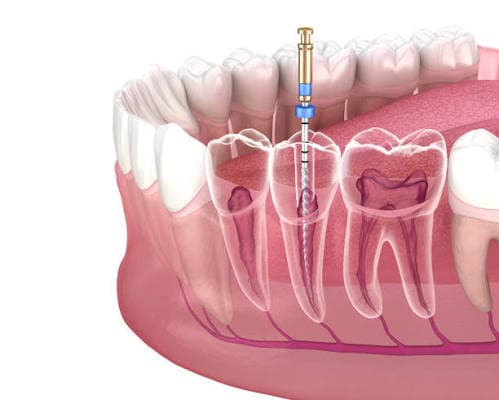
Laser Dentistry
Laser dentistry uses focused light energy for a gentler alternative to the drill, most often for root canal treatment, but also for gum reshaping, sensitivity relief, and soft-tissue procedures. It means less bleeding, faster healing, and a more comfortable visit.
Laser dentistry uses focused light energy to treat both hard and soft tissue with more precision and less discomfort than traditional instruments. At Dental Greens, we use advanced laser technology across several treatments, from root canals to gum reshaping, to make dental care faster to heal from and more comfortable overall.
Lasers deliver focused light energy that can cut, disinfect, or reshape tissue with far less vibration and pressure than a drill often without needing anaesthesia at all for minor procedures. This makes many treatments more comfortable, with less bleeding and faster healing.
The most common way we use laser dentistry is for root canal treatment, where laser energy helps sterilize the canal more thoroughly and supports faster tissue recovery than fully mechanical instrumentation alone. We also use lasers for several other treatments, outlined below.
We prioritize the gentlest effective approach for every patient, explaining clearly when a laser-assisted option is right for your treatment and when a conventional approach is more appropriate.
Other Ways We Use Laser Dentistry
Beyond root canal treatment, laser technology supports several other procedures:
- Treating tooth sensitivity by sealing exposed root tubules.
- Reshaping a "gummy smile" or lengthening a crown with minimal bleeding and no stitches.
- Preparing small cavities for a filling, often without a drill or anaesthesia.
- Correcting tongue-tie (restricted tongue movement) in both children and adults.
- Removing benign soft-tissue growths from the gums, lips, or cheeks.
Benefits of Laser-Assisted Root Canal Treatment
- Root canal treatment helps preserve your natural tooth.
- It removes infection and eliminates harmful bacteria.
- It relieves pain caused by infected dental pulp.
- It prevents the spread of infection to surrounding tissues.
- It restores normal chewing and biting function.
- It maintains the natural alignment of neighbouring teeth.
- It supports healthy jawbone structure by preserving the natural tooth.
- It reduces the need for tooth extraction and replacement.
- It provides long lasting results with proper restoration and oral care.
- It improves overall oral health while protecting your natural smile.
The Laser-Assisted Root Canal Process
Treatment begins with a thorough examination and digital imaging to assess the extent of infection. After ensuring your comfort with local anesthesia, the infected tissue is carefully removed and the root canals are cleaned, disinfected, and shaped using advanced instruments.
Once the canals are completely free of infection, they are sealed, and a custom crown is often recommended to strengthen and restore the tooth. We provide clear aftercare guidance and schedule follow up visits as needed.
Who Is Laser-Assisted Root Canal Treatment Suitable For
As the most common laser procedure we perform, laser-assisted root canal treatment may be recommended for patients experiencing persistent tooth pain, prolonged sensitivity to hot or cold foods, swelling around the gums, deep dental decay, cracked teeth, or infection affecting the dental pulp.
It is also suitable for teeth that have suffered trauma or repeated dental procedures that have compromised the health of the pulp tissue.
During your consultation, our dentists will perform a thorough examination and recommend the most appropriate treatment, laser-assisted or otherwise, based on the condition of your tooth and overall oral health.
Your Laser Dentistry journey
Examination & Imaging
A thorough exam and digital imaging assess the extent of the infection.
Comfortable Anaesthesia
Local anaesthesia ensures you're comfortable before treatment begins.
Cleaning & Disinfection
Infected tissue is removed and the canals are cleaned, disinfected, and shaped.
Sealing & Crown
The tooth is sealed, and a custom crown often follows to restore strength and appearance.
Laser-Assisted vs. Conventional Root Canal
| Conventional Root Canal | Laser-Assisted Root Canal | |
|---|---|---|
| Discomfort | Mild to moderate, well managed with anaesthesia | Typically lower, less vibration and pressure |
| Bleeding | Standard | Reduced, laser energy helps seal small vessels |
| Disinfection | Mechanical cleaning and rinses | Laser adds deeper bacterial reduction in the canal |
| Recovery | A few days of mild soreness | Often faster tissue healing |
What Laser Dentistry costs
| Laser-assisted root canal | From ₹5,350 |
| Re-root canal treatment | From ₹10,100 |
Starting prices shown for reference only; final cost depends on the tooth treated and case complexity. Confirm current pricing at your consultation.
Aftercare for Laser-Assisted Root Canal Treatment
- Avoid chewing directly on the treated tooth until it's fully restored with a filling or crown.
- Stick to soft foods for the first day or two khichdi, dal, yogurt, and mashed vegetables are gentle choices.
- Brush and floss gently as normal, taking care around the treated area.
- Avoid smoking, which can slow healing and affect the long-term success of the treatment.
- Book your crown appointment promptly if one is recommended, to protect the tooth from fracture.
- Contact us if you notice persistent pain, swelling, or pressure after the numbness wears off.
A closer look
Common misconceptions, cleared up
Root canal treatment is one of the most painful procedures in dentistry.
Modern anaesthesia keeps you comfortable throughout it's designed to relieve the pain of an infected tooth, not cause it.
A root canal can make you sick or cause illness elsewhere in the body.
There's no scientific evidence supporting this myth. It's a safe, well-established procedure used millions of times a year.
It's simpler and better to just have the tooth pulled out.
Saving your natural tooth with root canal treatment usually preserves better chewing function and jawbone health than extraction and replacement.
Why Choose Dental Greens for Laser Dentistry
Preserving your natural teeth is one of our core treatment philosophies whenever possible, we focus on saving rather than replacing a tooth. Our team combines clinical expertise with advanced diagnostics for precise, comfortable treatment that protects as much healthy structure as possible.
We follow strict sterilization standards and internationally accepted protocols, explaining your options clearly so you can make informed, confident decisions, whether you are local to Delhi or visiting from abroad.
Common questions
Modern root canal treatment is designed to relieve pain, not cause it local anaesthesia keeps you comfortable throughout.
Many root canals are completed in a single visit, though some cases may need a follow-up appointment.
Often yes a custom crown protects and strengthens the treated tooth, especially for back teeth.
Left untreated, the infection can spread, cause worsening pain, and eventually lead to tooth loss.
With a proper restoration and good oral care, a root canal treated tooth can last a lifetime.
Laser energy helps sterilize the canal more thoroughly, promotes faster tissue healing, and typically means less bleeding and post-op discomfort compared to fully mechanical instrumentation alone.
It's uncommon, but persistent infection or a missed canal can occasionally cause a treated tooth to need retreatment we monitor healing at follow-up visits to catch this early.
Stick to soft foods like khichdi, dal, yogurt, and mashed vegetables for the first day or two, and avoid chewing directly on the treated tooth until it's fully restored.